Last year was a really good reading year for me - I read 76 books, 32 of which were nonfiction (which was by far my best year for that particular stat). I also finished 12 comic collections, and 10 or so picture books and chapter books, since being a grownup is overrated. And while I didn't quite meet all my reading challenge goals, I did finish the 30 books I pledged for the Birth Year reading challenge, and knocked 19 volumes off my owned TBR mountain.
This year my reading has also started out wonderfully. One of the things I did early on was choose several series I've been planning to read (or reread) for a while, and then assign each of them to a month (or two, if needed). This way, I have the pleasure of getting swept away into a particular fictional universe for an extended period of time. It's sort of the book equivalent of binge-watching a show on Netflix. Thus far, I'm quite happy with my choices: January was the Wayward Children series by Seanan McGuire, and February and March are set aside for the Grishaverse books by Leigh Bardugo.
I'm also continuing to participate off and on in the monthly challenges on Habitica: Read the World, Keeping It Real, and KidLit for Grownups have been a lot of fun over the past year and I see no reason to stop now. Lastly, I have the two yearly challenges I've enjoyed the most: the Birth Year reading challenge, this time with a goal of 12 books, and the Mount TBR challenge, again aiming to summit Mont Blanc with 24 books. I'll no longer be listing which books were read for which challenges, but if you want, I suppose you could make a game out of guessing what counts for what :)
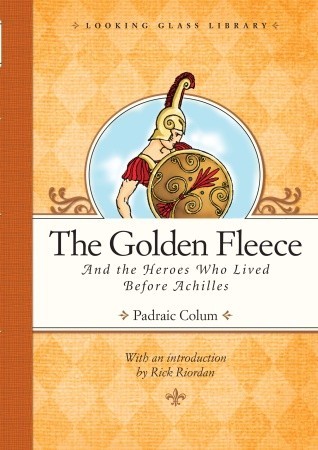
1. The Golden Fleece, by Padraic Colum
I'm not particularly familiar with Greek mythology, so a good number of these stories were new to me, although I'd heard some of the names before. Mythological heroes are generally not a very likeable lot, but the tales themselves are fascinating. I particularly like the layered storytelling, and the fantastical creatures and beings, and the interplay between the gods and humankind.
My rating: 8/10
2. Every Heart a Doorway, by Seanan McGuire
I read this book for the first time last year, and I reread it this year because I wanted to read the series in one go. I think I even liked it a bit more the second time around, as I knew what was coming and so could enjoy the smaller details of the story in terms of how they fit into the larger whole. And rereading only served to increase my attachment to the characters, and thus deepen my emotional connection to the worlds within these books.
My rating: 8/10
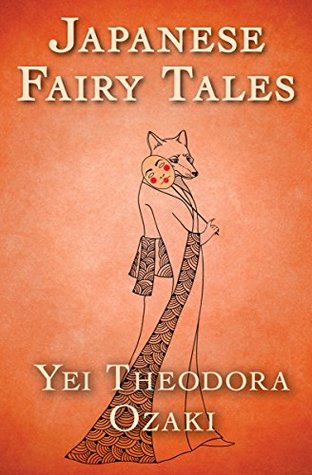
3. Japanese Fairy Tales, by Yei Theodora Ozaki
Fairy tales and folklore fascinate me, especially as I read more of them and the common threads become more evident. That being said, these fairy tales gave me a bit of whiplash. Some of them seemed to have been fairly heavily westernized, while others definitely felt like products of a culture that I didn't fully understand. I know fairy tales are generally fairly dark in the original forms, and these were no exception, but some of them seemed to lack any sort of moral to justify the violence and death. On the other hand, I did enjoy the depictions of the various fairy tale creatures and kingdoms, and the way that some of the tales had shared characters, such as the dragon king of the sea.
My rating: 6/10
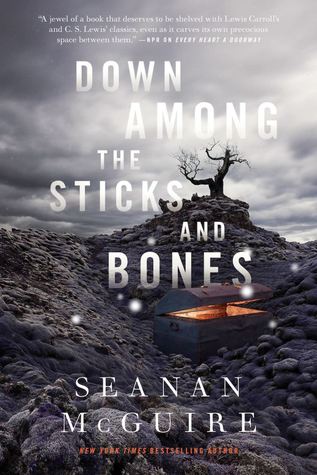
4. Down Among the Sticks and Bones, by Seanan McGuire
This was dark and lovely and I very much enjoyed it. Jack was one of my favorite characters from Every Heart a Doorway, so I was quite excited to read her story (although now I want to know more than ever what happened after she went back to the Moors). I've always been attracted to darker fantasy worlds, and the vivid descriptions of the Moors really brought the world to life. I also liked the twist on your typical mad scientist tale.
My rating: 9/10
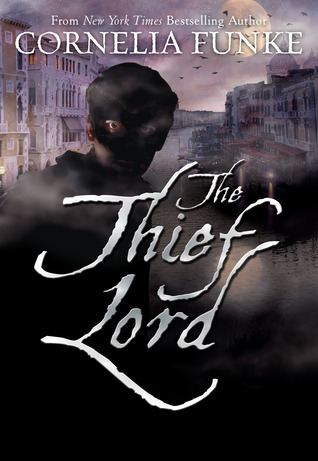
5. The Thief Lord, by Cornelia Funke
This is such a delightful book, and I've reread it many times. I love the way the author portrays Venice, focusing on its beauty while still acknowledging the effects of time on the city. I also love the characters - every single one of them manages to feel very real and relatable, which is no mean feat, given that there's quite a crew of them. Victor is my particular favorite, with his love of ridiculous disguises and his soft heart for both tortoises and children. And lastly, I love that this is a magical realism book for kids, and a particularly lovely one at that.
My rating: 9/10
6. Beneath the Sugar Sky, by Seanan McGuire
While still good, this book didn't quite measure up to the previous two books in the series. A large part of this was due to having three new characters added into the mix, all of whom I was supposed to care about, but none of whom really came alive for me. Rini was never fleshed out enough for me to become invested in her quest, Cora felt like a shallow attempt at creating an audience surrogate, and Nadya was just there to be expendable, even though she was the most interesting of the new characters. Having the new characters also meant sidelining Kade and Christopher more than I liked (especially Christopher, who was one of my favorites from the first book). That being said, the worldbuilding was just as wonderful as ever, and it was fun to visit both Confection and the Halls of the Dead. I also liked the fact that the mechanics of the doors got a little more development.
My rating: 7/10
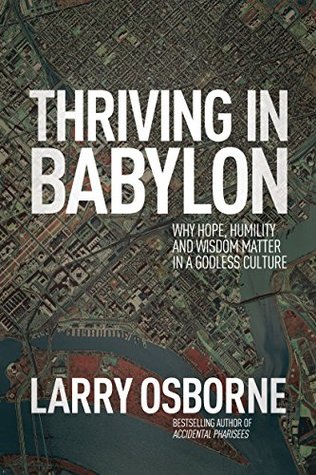
7. Thriving in Babylon, by Larry Osborne
I found some parts of this book to have useful insights, other parts to be overly simplistic, and then there were the problematic parts I distinctly disagreed with (for the record, I'm okay with disagreeing with authors on some points, as long as there aren't glaring errors in key doctrinal areas). The book was definitely an improvement over the video series that went with it (which was pretty bad; don't waste your time watching it), and I feel like the author pointed out some things I wouldn't necessarily have thought about otherwise, so I'm glad I read it, even if there are a lot of other resources on Christian living that I would recommend over this one.
My rating: 6/10
8. The Initiation, by Ridley Pearson
I'm not quite sure who the intended audience for this book is. The characters aren't very well developed, and really depend on the reader already being familiar with who Holmes and Moriarty will become as adults, but the book is marketed as and reads like your typical middle-grade novel. And yet I doubt your average ten-year-old has the necessary familiarity with Sherlock Holmes, while those older kids and adults who are well acquainted with Holmes and Moriarty will be disappointed by the level of writing in this book. That being said, the two intertwined mysteries were enough to keep me engaged even with the thin characterization. The payoff at the end wasn't as good as I was hoping, since it turns out that this book is mostly just a setup for the rest of the series, but I'm interested enough in what happens next that I'll probably read the other two books.
My rating: 6/10
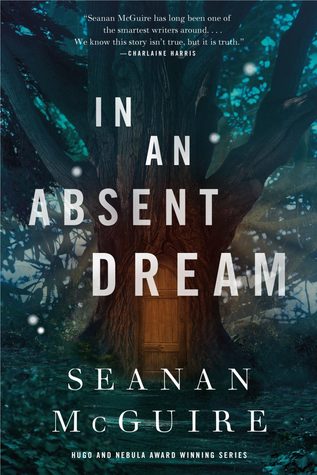
9. In an Absent Dream, by Seanan McGuire
This series just keeps making me happy. The Goblin Market was probably the most fascinating of the worlds we've visited so far, and I loved the exploration of what it means to owe things to each other, whether that be actual debt or the obligations of relationship. I also liked the slow reveal of the darker side of the Market, coupled with Lundy's transition from child to adult. If you're looking for a happy ending, you won't find it here, but that's one of the things I like so much about these books - there's hope and beauty and love, but it's always side by side with sorrow and striving and mistakes, just like in real life.
My rating: 8/10
10. In the Time of the Butterflies, by Julia Alvarez
Sometimes I feel like historical fiction makes things feel more real to me than more factual accounts do. I think this is because a well-written fictionalized version of a historical figure allows the reader to connect at a deeper level than just historical fact, and thus increases the impact of whatever happened to them. I mention this because this book did a wonderful job of bringing the Mirabal sisters to life in its pages, which helped me grasp a bit better the full extent of the terrible things that happened under Trujillo's rule in the Dominican Republic. You know from the beginning how the story will end, and I told myself I would just avoid caring too much about the characters I knew were going to die, but the writing made that impossible. I particularly liked the fact that each sister had a very clear and unique voice - Patria was my favorite - and I liked the way the storytelling format changed depending on who was speaking.
My rating: 9/10
11. Coming of Age in the Milky Way, by Timothy Ferris
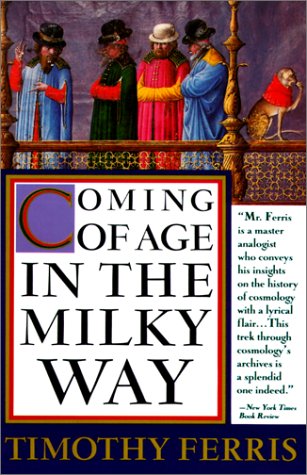
I appreciated the author's methods in this book. First, he mostly focused on the people rather than on the details of various theories, giving just a general overview of each theory along with the history of its development. This kept the book from getting bogged down in complicated technical details, and gave a good background and context for each progressive step in our understanding of the cosmos. Also, I don't think I realized quite how eccentric some of these guys were, so that was entertaining. Second, the author did a nice job of showing how various scientific developments in astronomy, geology, biology, and physics were all connected, and all instrumental in piecing together our knowledge of the universe. The chapter on the history of physics wasn't quite as readable as the rest of the book, and of course the book was published thirty years ago so it doesn't include any theories or discoveries post-1988, but overall I found this to be an interesting history of human understanding of the cosmos.
My rating: 8/10
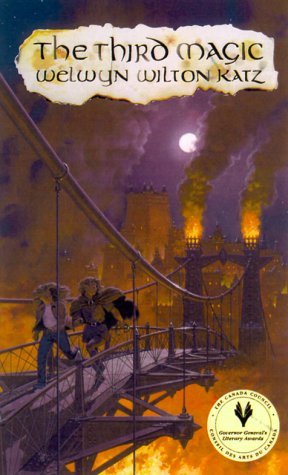
12. The Third Magic, by Welwyn Wilton Katz
I really liked that this book wasn't so much a retelling of the Arthur legend as it was an intertwining of that story with a completely original tale. I also thought the magic system was fascinating, and wished it could have been fleshed out a bit more. I wasn't a big fan of any of the main characters, and there were a few too many convenient plot developments for my taste, but I still enjoyed the book overall. The ending in particular was not quite what I expected, but in a good way.
My rating: 7/10
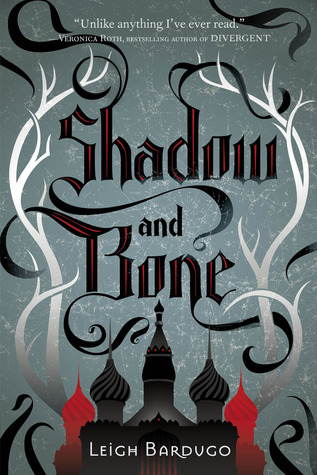
13. Shadow and Bone, by Leigh Bardugo
Things I liked: Bardugo's storytelling and worldbuilding really work for me. She definitely knows how to draw a reader into a scene and a setting and bring a world to life. The action sequences were also well written, and although this wasn't my first excursion into the Grishaverse, the magic system remains as intriguing as ever. Things I didn't like: It's yet another YA story with a love triangle, told in first person by a Chosen One who is of course the only hope for the world. There were also some significant plot holes that just got glossed over, and none of the characters were very interesting to me, with the exception of Mal, who was underutilized. Overall, this book had a lot of the things I loved about Six of Crows, and I'll definitely be finishing the trilogy, but there's no one here for me to care about like I care about Kaz and Inej and Jesper and Wylan.
My rating: 7/10
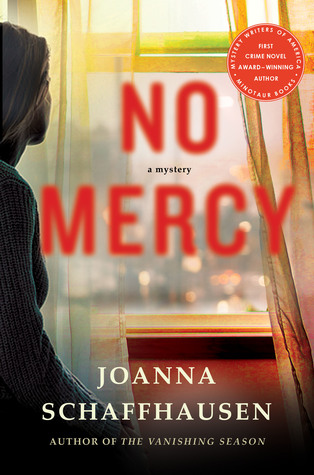
14. No Mercy, by Joanna Schaffhausen
I'm still waiting for this author to publish a book where the crime to be solved really draws me in, preferably with a great reveal towards the end - I'm certain she's capable of it. That being said, Reed and Ellery felt much more fleshed out in this second book, and their interactions carried the story when the mystery itself wasn't quite able to. I did like the unexpected DNA results at the end, which set up a third book very nicely while still allowing this book to feel like a complete story in itself.
My rating: 7/10
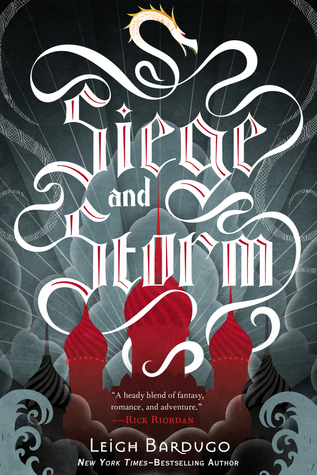
15. Siege and Storm, by Leigh Bardugo
Once again, the most interesting characters hover at the edges of the narrative, while Alina still isn't a particularly likeable main character. However, the writing itself continues to paint a vivid picture of a fascinating world, and it's easy to see the characters coming to life and the scenes playing out in my head as I read, so I'm still enjoying this trilogy. The pacing felt a bit off in this book, with a lot happening in the beginning, a much slower 300 pages in the middle, and then a lot crammed into the end, but I think if I liked Alina more the middle wouldn't have felt as slow. I did really like getting to see a bit more of the world before the story returned to Ravka, since one of the best things about these books is how creative the worldbuilding is.
My rating: 7/10





No comments:
Post a Comment